Alcoholism
The Good Nurse: A True Story of Medicine, Madness, and MurderAlcoholism is presented as a long-running and concealed part of Charles Cullen’s life, not as a single crisis with a clear resolution. His drinking began well before his marriage, continued despite repeated encounters with treatment, and later took place behind a locked basement door while Adrianne Cullen believed he was abstinent. In their marriage, it became both a hidden routine and a source of escalating conflict, bound up with his depression and her growing fear for herself and their children.
A pattern formed before marriage
Drinking was one of the few parts of military life at which Cullen excelled, and he drank with the aim of getting drunk. Red wine and tropical drinks were among his preferences; when ordinary alcohol was unavailable, he also drank Listerine. His drinking had already landed him repeatedly in military infirmaries and a psychiatric hospital, and brought him into contact with Antabuse and Alcoholics Anonymous. These episodes establish a history of serious misuse before he and Adrianne built a family together, but the narrative does not describe them as a lasting cure.
Cullen presented that history in courtship as part of an unusually candid account of his personal problems, including depression and alcoholism. Adrianne took his openness as evidence that he understood himself and had his difficulties under control. She had never seen him drink: when asked about it, he said he simply could not. She understood his abstinence as conviction rather than as a sign of appetite held in check. When he moved into her apartment in Union, she even discarded a dusty bottle of Baileys Irish Cream that she had kept for guests. The gap between the self-knowledge she thought his candor demonstrated and the drinking he concealed would define much of their later conflict.
Concealment at home
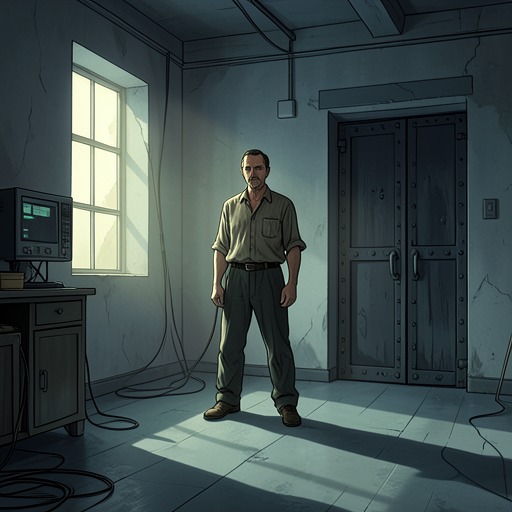
After the couple took a mortgage on a small house in Phillipsburg, Cullen kept alcohol in his Navy footlocker, stored the footlocker in the boiler room, and kept the boiler room locked. He drank alone in the basement, apart from his wife. The location suited the secrecy: the room had one entrance, was surrounded by bedrock, and remained dark. There he could drink and watch the pilot light move inside its metal enclosure. The domestic detail turns concealment into a physical arrangement, with alcohol separated from family life by both a locked door and a descent into the basement.
The marriage was already shaped by distance. Cullen’s work, studies, and commute kept him away, while Adrianne felt increasingly isolated; their schedules were often at odds. After their first daughter, Shauna, was born, Adrianne felt his attention shift almost entirely to the baby. A move to a new job briefly seemed to bring more animation to Cullen and a more hopeful routine to the household, but that improvement did not last. After their second daughter, Saskia, was born in December 1991, Adrianne could no longer ignore the drinking. She broke into his footlocker while he was at work and confronted him with the bottles. He first denied the drinking, then made her intrusion into his privacy the issue; when pressed, he acknowledged that he drank but insisted it was not a problem.
Attempts to confront the drinking
Adrianne saw a damaging cycle: she believed Cullen’s depression worsened with his drinking, while the family remained at its center. Confronting him when he was drunk led to arguments and hurtful remarks that he might not acknowledge or remember the next day. When she tried to speak with him while he was sober, he withdrew to the basement. Her employer’s health benefits could pay for five days at an alcohol treatment center, but Cullen did not want to stop drinking. Adrianne left his old Alcoholics Anonymous books on the counter in the hope that he might return to earlier resolutions. Instead, he grew angry, ignored them, or put them away; he would then sit with Coke and potato chips until he retreated downstairs.
The book describes drinking as giving Cullen temporary relief: initially it lifted his spirits, quieted the noise, and narrowed his attention to the present. That relief did not bring him closer to his wife. He felt wronged and misunderstood, convinced that she failed to appreciate the intensity of his suffering. He tried to make that suffering visible through demonstrations, including arranging for her to encounter him on a call to a funeral parlor asking about burial rates. On another occasion he staged a suicide scene on the living-room floor, with prescription pills scattered beside him. Adrianne’s exasperated response deepened his sense of being ignored; the scene then became another injury he carried into the next few days. The narrative connects these displays to his demand for sympathy, while keeping distinct the fact that his drinking itself remained something he concealed and denied as a problem.
Crisis and the collapse of the marriage
By November 1992, Adrianne had decided privately to consult a lawyer about divorce. She was worried that what had happened to Queenie could happen to her children. The decision came amid a marriage strained by Cullen’s drinking, depression, and failed attempts at confrontation; it was not presented as the result of one argument alone. Her concern also shaped a specific choice about her health care: when gallbladder surgery was scheduled at Warren Hospital, where Cullen worked, she insisted that the divorce papers be ready before she went there. She did not explain her fear in detail to the lawyer, but she would not enter the hospital without a document stating her intent to divorce and the reasons behind it.
The legal papers were delivered to Cullen at Warren while he was working in the ICU. After Adrianne’s surgery, her father barred him from seeing her in the recovery ward and stayed at the house while she recovered. Cullen became first indignant and then pitiable to her, and she began to feel some of her old sympathy for him. That response shows how the marriage did not resolve neatly when she sought separation: concern for the father of her children persisted even as she tried to protect herself. The account then records that the couple agreed to separate their lives, leaving the drinking within a relationship that was breaking apart rather than showing a recovery from it.
Drinking, self-harm, and narrative significance
The book places alcoholism beside Cullen’s recurrent suicidal behavior without treating the two as identical. During his United States Navy service, he drank heavily and, when alcohol ran out, turned to Listerine or cleaning fluid. In January 1984, he drank a bottle of poison and reported to sick bay; it was his third suicide announcement since joining the service and his third ambulance trip to the Charleston Naval Hospital psychiatric ward. The narrative gives the drinking and the suicidal gestures a shared setting in his distress, but does not make alcoholism an all-purpose explanation for his later actions.
Years later, after killing Matthew Mattern with digoxin, Cullen’s actions again placed alcohol beside an attempt to die. At a basement apartment, he bought a disposable hibachi, set it alight in a clawfoot bathtub, and carried a glass of drink back from the kitchen. A police officer arrived after the landlord called 911 and found Cullen at the apartment door. The episode closes not with a resolution of his drinking but with another interruption of a crisis. Across these scenes, alcohol repeatedly offers Cullen a private interval of focus or escape; in the household, that privacy takes the form of a locked room, while in moments of crisis it sits beside self-destructive acts. Its persistence, despite treatment history and Adrianne’s efforts to make help available, makes alcoholism a continuing condition of the life the book recounts rather than a problem the marriage manages to solve.